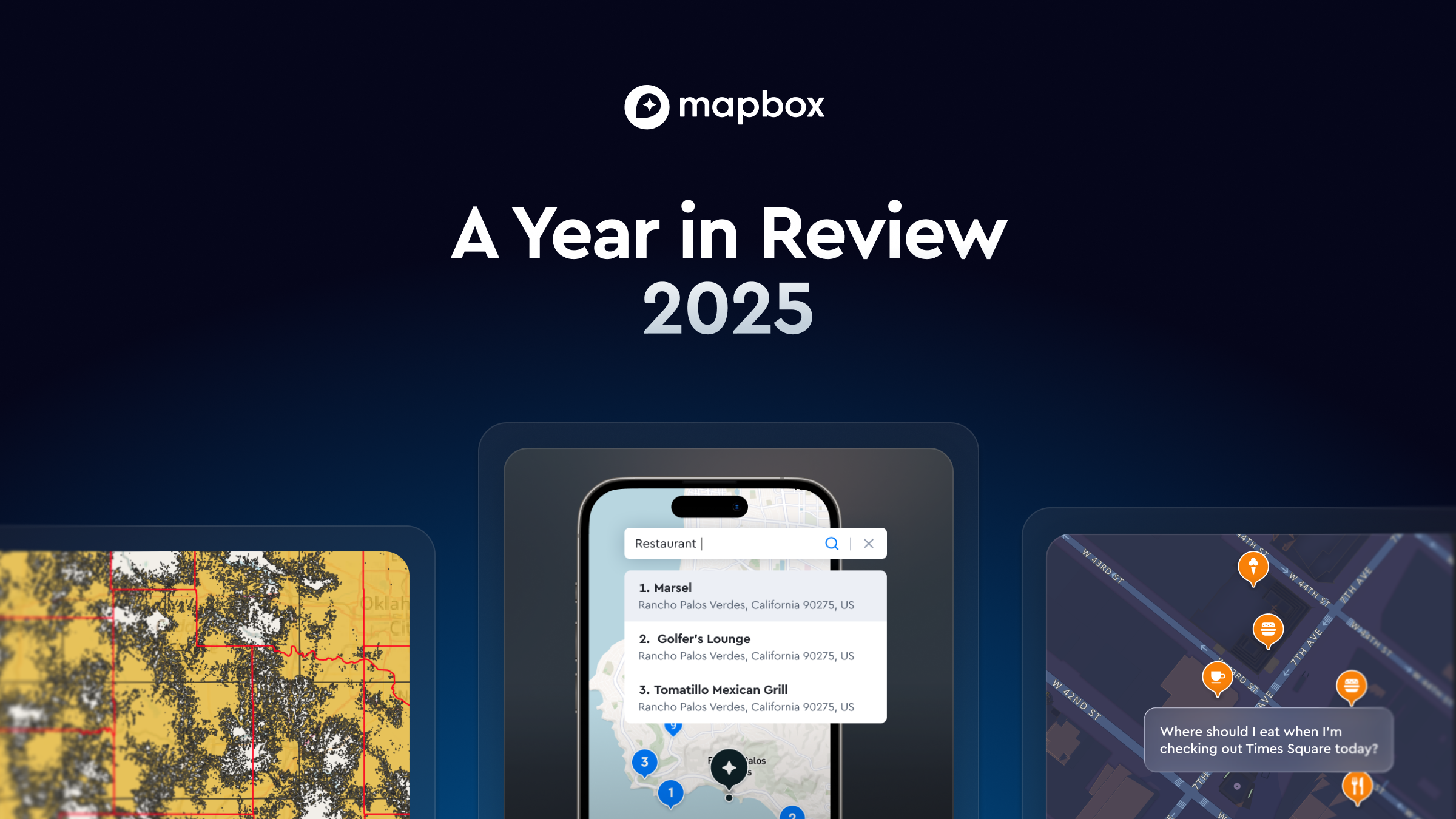
Every year has its own rhythm, but 2025 stood out with a new uptick in creative energy. At Mapbox, we spent the past twelve months building new products, connecting with thousands of developers, joining major industry events, and sharing ideas with partners all over the world. But none of it would have had meaning without you — our customers, our developer community, our partners, and everyone who builds with us.
A year shaped by a global developer community
The global community of developers building with Mapbox is at the center of everything we do. Whether you joined one of our webinars, visited us at an event, connected with us on social media, or used Mapbox in your projects, your energy fueled us all year long.
Every time we see new apps built with Mapbox SDKs, creative experiments with our APIs, or a post from a developer showing off their work, we learn. Every shared map, every comment, and every collaboration helps our team learn what matters to – and inspires – our community of builders.
Our 2025 releases prioritized flexibility and ease of building
A major focus of 2025 was giving developers more freedom in how they design and build with Mapbox. We continued improving our styles, tools, data, and workflows so teams can create maps that reflect their brand, add valuable product features, and support new ideas without added complexity.
More creative control with Standard style updates
Our updates to the Mapbox Standard style gave developers increased control over colors, layers, textures, and visual details. These improvements make it easier to set the right tone for an app while benefiting from the features of Mapbox Standard. Teams told us that they appreciate being able to match a brand identity while still using a style built for performance.
.gif)
A simpler, cleaner Mapbox Console
We introduced a new Mapbox Console with a more organized layout and clearer paths for project setup, usage monitoring, and account management. Developers shared that the new design makes it easier to focus. From quick starts to billing tools to style management, the improved Console removes friction from daily tasks.
Expanded POI coverage and smarter Search results
The Mapbox Search Box API updates include expanded global coverage, improved localization, and more relevant results. This year’s release added POI and address data for 53 new countries and improved attribute accuracy compared to ground truth, measured by attribute completeness and correctness. With more than 375 million addresses and 330 million POIs powering Geocoding, Search Box, and Location AI services, Mapbox keeps search results aligned with the real world.
Improved coverage and accuracy for Geocoding
The Mapbox Geocoding API enhancements include improved query understanding, greater accuracy, and broader global address coverage. With upgraded engine models, smarter address clustering, refined ranking, and stronger fuzzy matching, Geocoding now delivers more precise, context-aware results worldwide.
Enhanced Mapbox Boundaries for better regional analysis
With the release of Mapbox Boundaries 4.5, coverage across Europe expanded significantly, with 107,000 new boundaries added and over 56,000 updated for improved accuracy. These enhancements give analysts, planners, and developers deeper insight into cross-border regions, cities, and districts. Many companies rely on Boundaries for planning, logistics, and business intelligence, and this update offers more detail for those workflows.
A streamlined way to build map interactions
We introduced a simpler system for creating map interactions, making features like click actions, rich detail views, and hover effects easier to configure. Instead of piecing together multiple steps, developers can now define interactions with a cleaner and more predictable approach.
New 3D landmarks and icons around the world
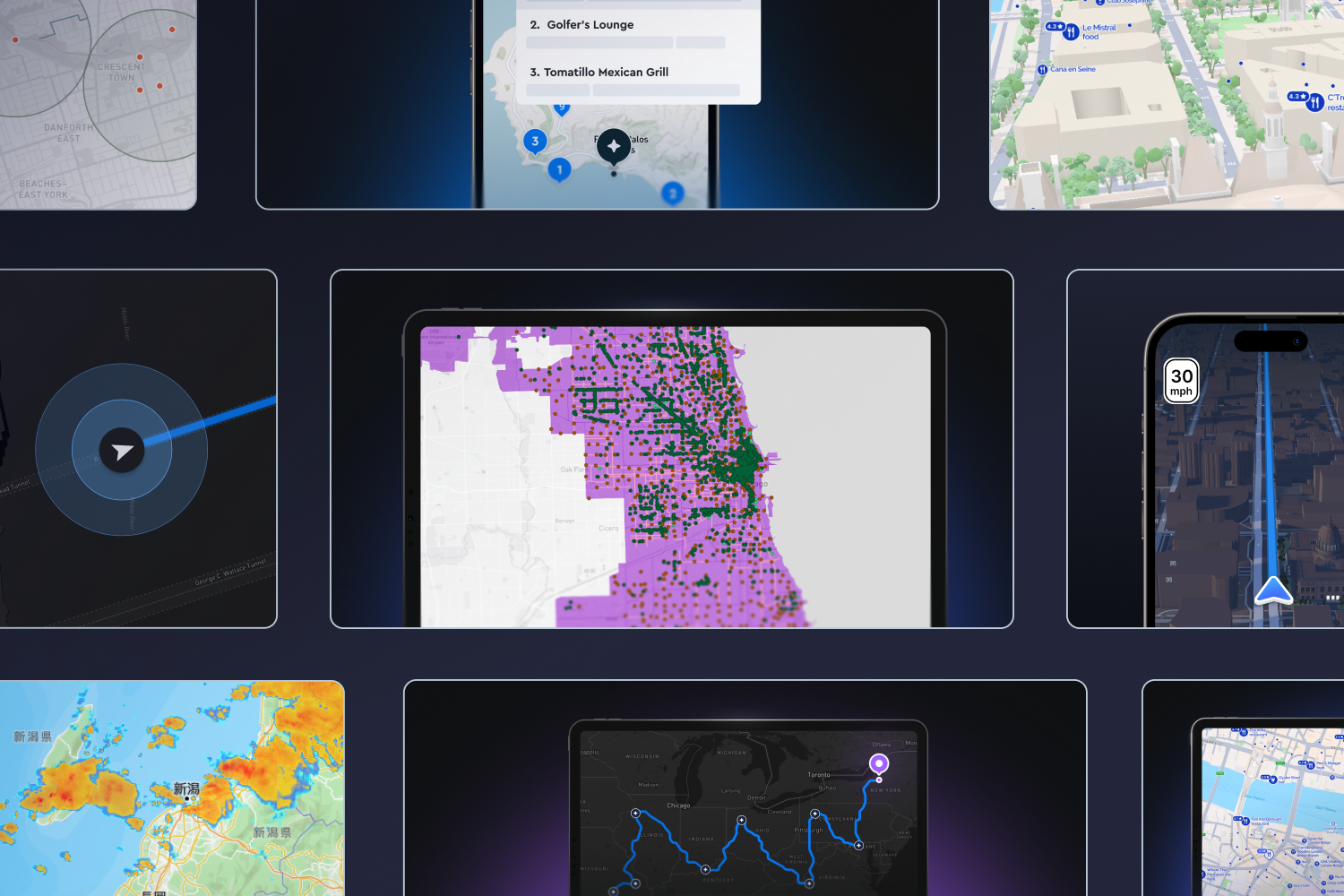
In 2025, we added new global 3D landmarks and added landmark icons to the Mapbox Standard basemap. These additions offer more personality and local character while helping users recognize important places at a glance. From famous towers to modern stadiums, these visual updates made maps more engaging without distracting from core functionality.
Detailed weather layers for Japan
Our new Japan weather layers help teams working in transportation, logistics, and outdoor apps show timely conditions with flexible styling options. These layers save development time, open new opportunities for innovative weather-based features, reduce manual data processing, and help users better understand weather patterns across the country.
Updated aerial imagery across the U.S. and Europe
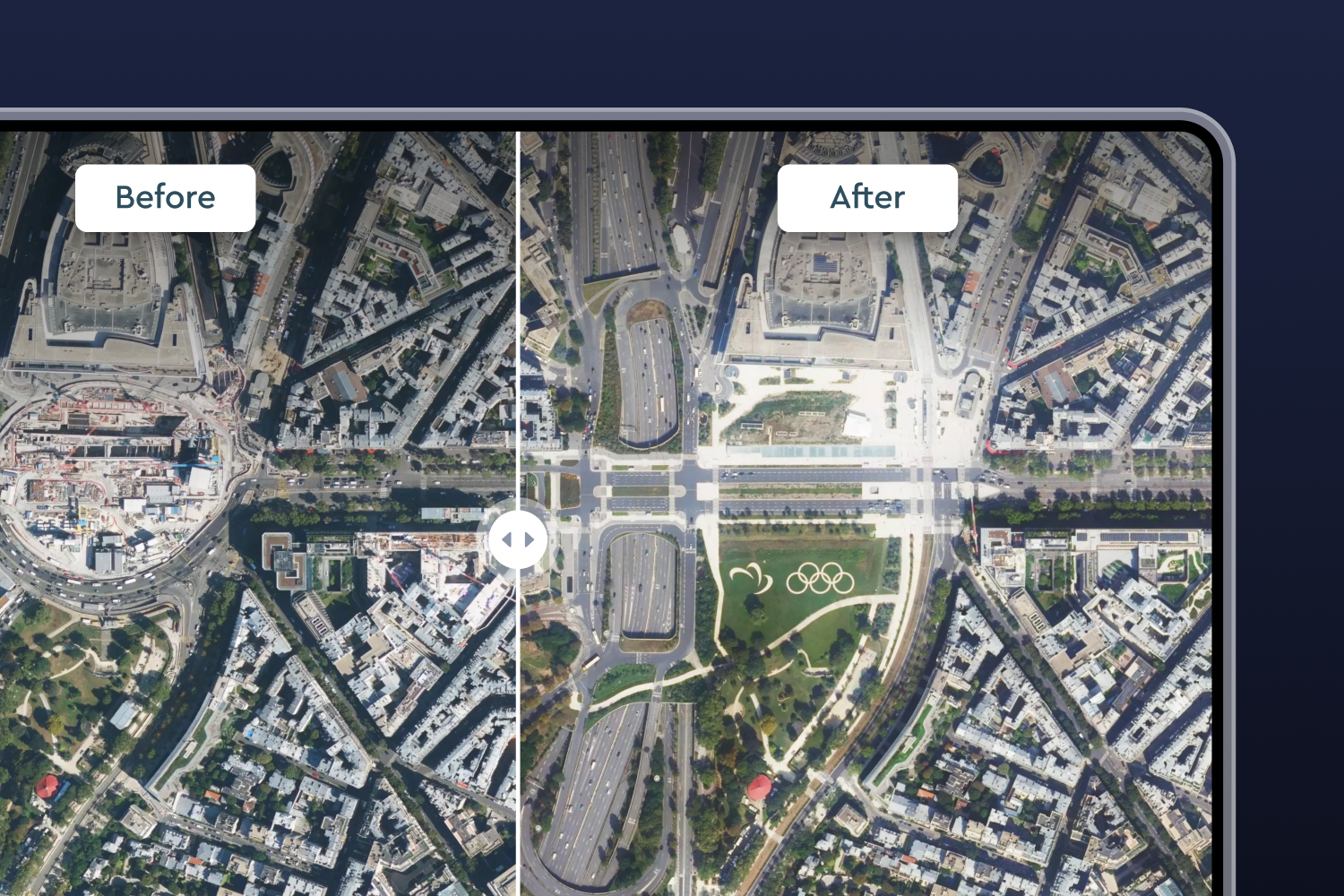
We expanded high-resolution aerial imagery in the Mapbox Satellite tileset by an additional 670,000 square kilometers across the U.S. and parts of Europe. The updated imagery supports a wide range of use cases, from urban planning to real estate to outdoor recreation, delivering a clear and current view of the world.
Building better betas together
Mapbox also expanded how we launch betas and develop new features with our customers. Testing new tools early helps us learn what works well and what needs adjustment, and your feedback shapes the direction of each release.
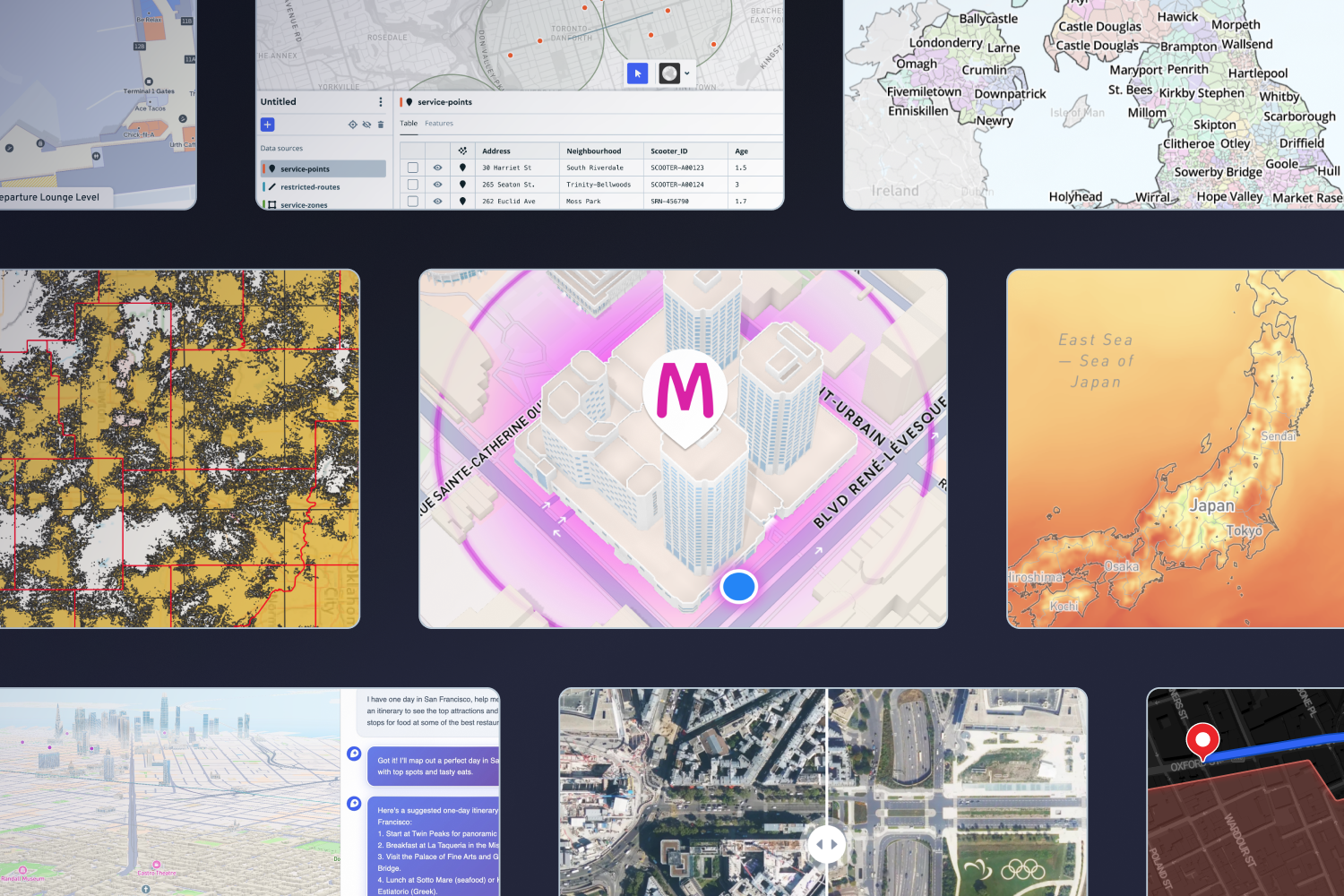
We introduced several betas across the Mapbox platform including Data Workbench, Boundaries Flat File Sample Data, and the Mapbox Location Agent, and invited developers to try them. If you are interested in joining a beta program or want early access to upcoming releases, we encourage you to fill out the interest forms on our Releases page. Your input helps us keep improving the platform in ways that support real products and real teams.
Location AI introduces conversational and agent-driven map experiences
One of the most exciting steps forward this year was the launch of our new Location AI tools. These offerings invite developers to create fresh ways to interact with maps (and map building) using natural language.
Giving AI applications and agents the spatial awareness they need
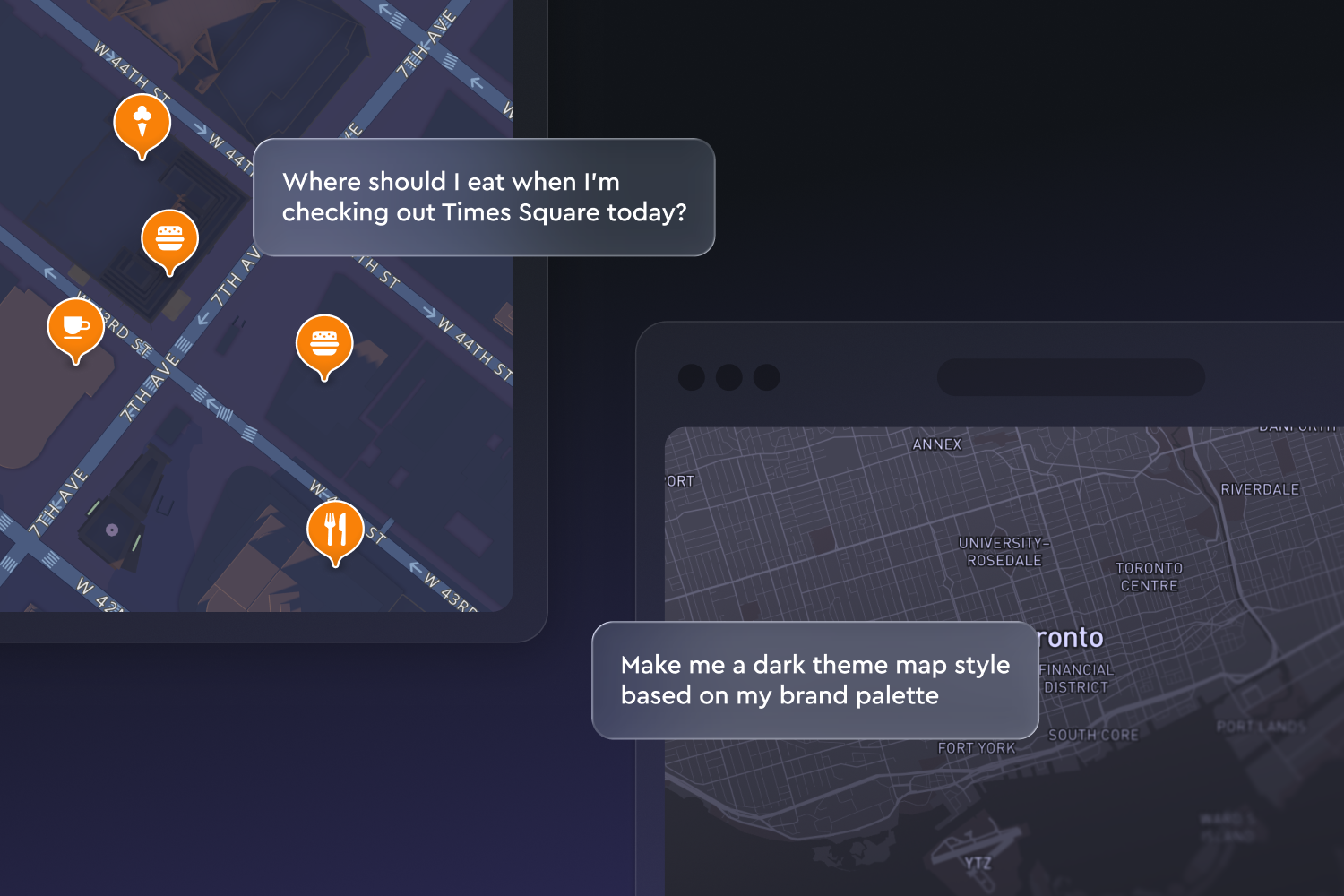
As artificial intelligence advances, a new type of customer has appeared: the agent. These AI agents can analyze large amounts of information, offer suggestions, and take action, yet many still struggle with questions that involve place. Without spatial understanding, their answers fall short. The Mapbox Model Context Protocol (MCP) Server fills this gap by giving agents and large language models structured access to the Mapbox location platform. With this connection, AI assistants and agent-driven applications can understand distance, direction, nearby places, and real-world context. It also provides a grounding layer by exposing high-quality, continuously updated geospatial capabilities that keep AI responses accurate and tied to the physical world. The Mapbox MCP Server is available today and only requires a Mapbox account access token in order to begin making Mapbox API calls.
A ‘conversational’ approach to map design
We shared our Location Agent demonstration as a way to illustrate how combining AI agents and the Mapbox MCP Server makes it easier for users to interact with maps as a ‘canvas’ for conversational AI. Instead of tapping, filtering, or typing, users can ask simple questions like “Where’s the closest trailhead?” or “Show me places to eat near my hotel.” The Location Agent understands what they mean and gives answers without friction.
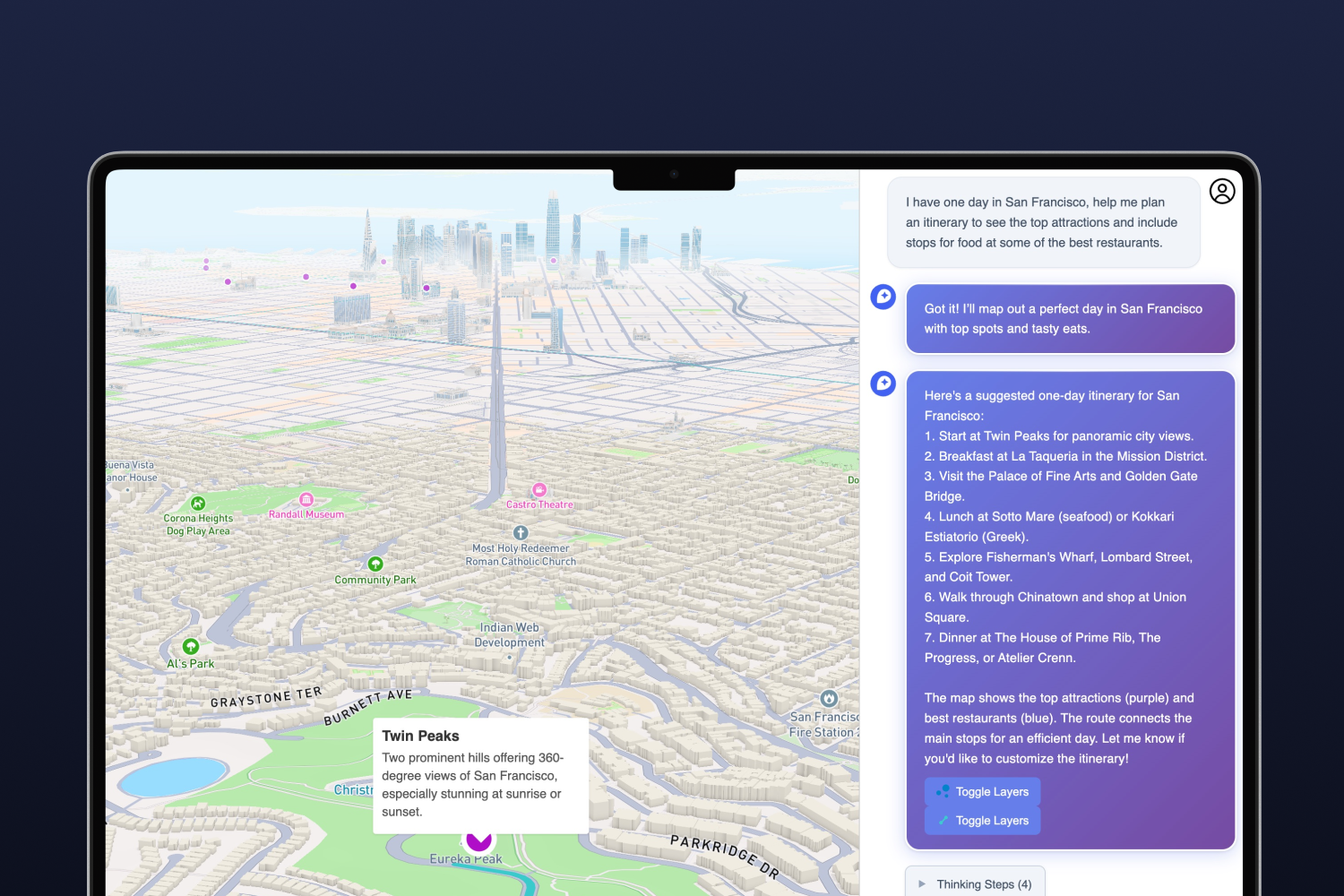
This idea of “conversational maps” grew out of a simple goal: help developers build experiences that feel intuitive and fast. We're excited to see the early AI agents and applications already experimenting with these tools and shaping what will come in 2026.
Supporting developers with the Mapbox DevKit MCP Server
We also introduced the Mapbox DevKit MCP server. The DevKit helps developers build with Mapbox faster by allowing AI coding assistants to understand map data and Mapbox-specific instructions. It reduces repetitive work and gives developers more time to focus on creativity rather than setup. We heard from many teams that the DevKit makes early testing smoother.
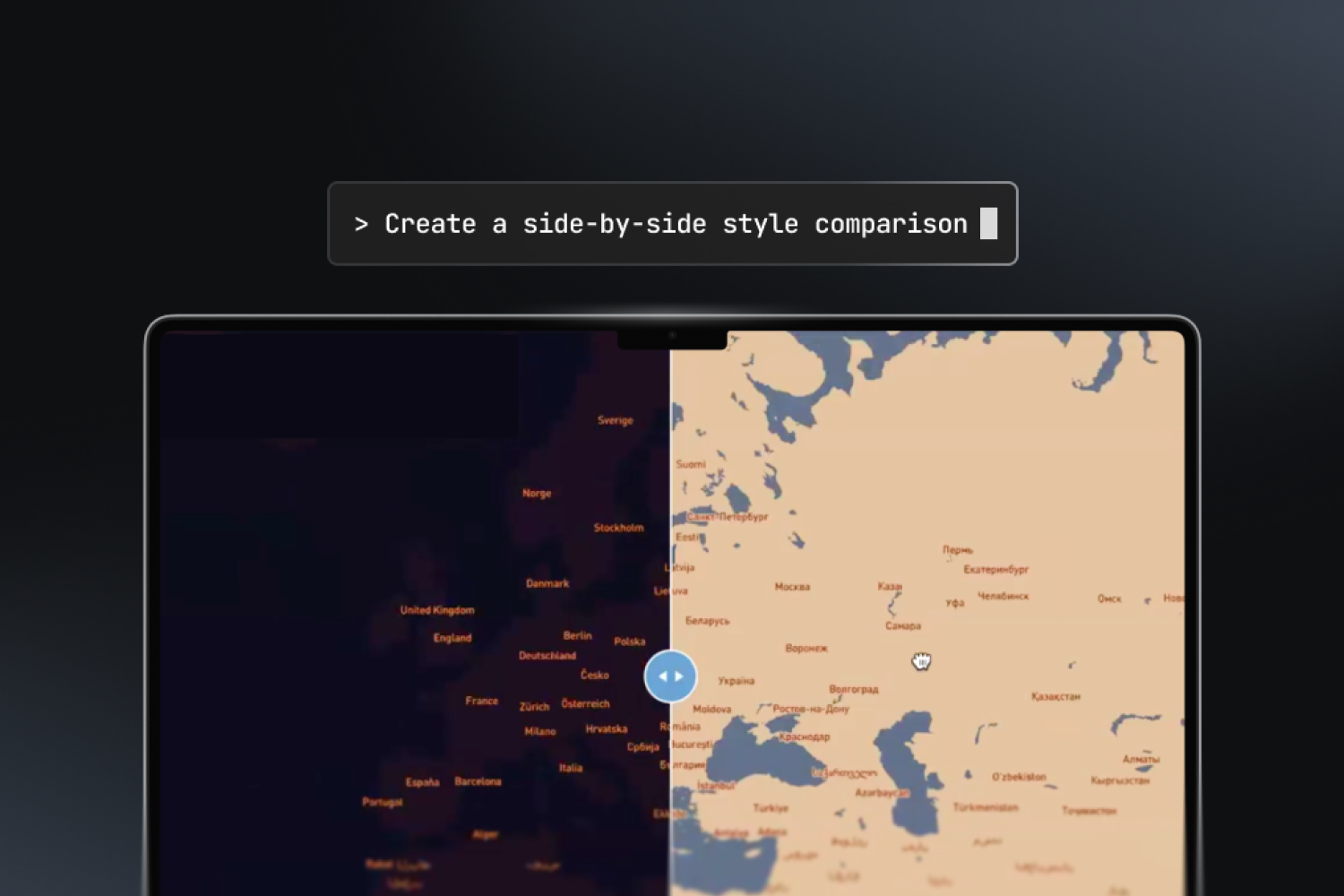
Together, the Location AI releases showed where the future is heading: maps that can listen, respond, and support new user experiences.
Supporting developers through new Mapbox tutorials, playgrounds, and demos
Our Developer Relations Team maintains docs.mapbox.com and publishes helpful tools, demos, and other resources to help developers build with Mapbox. The team overhauled the Mapbox developer tutorial offering this year, including a new step-by-step user interface and over 25 new tutorials.
Developer Playgrounds are standalone web tools built to help developers get started quickly with APIs and configuration. New playgrounds built in 2025 include the Mapbox Standard Style Playground, the Search Box API - Forward and Reverse Playground, and navigation-related playgrounds for the Matrix and Map Matching APIs.
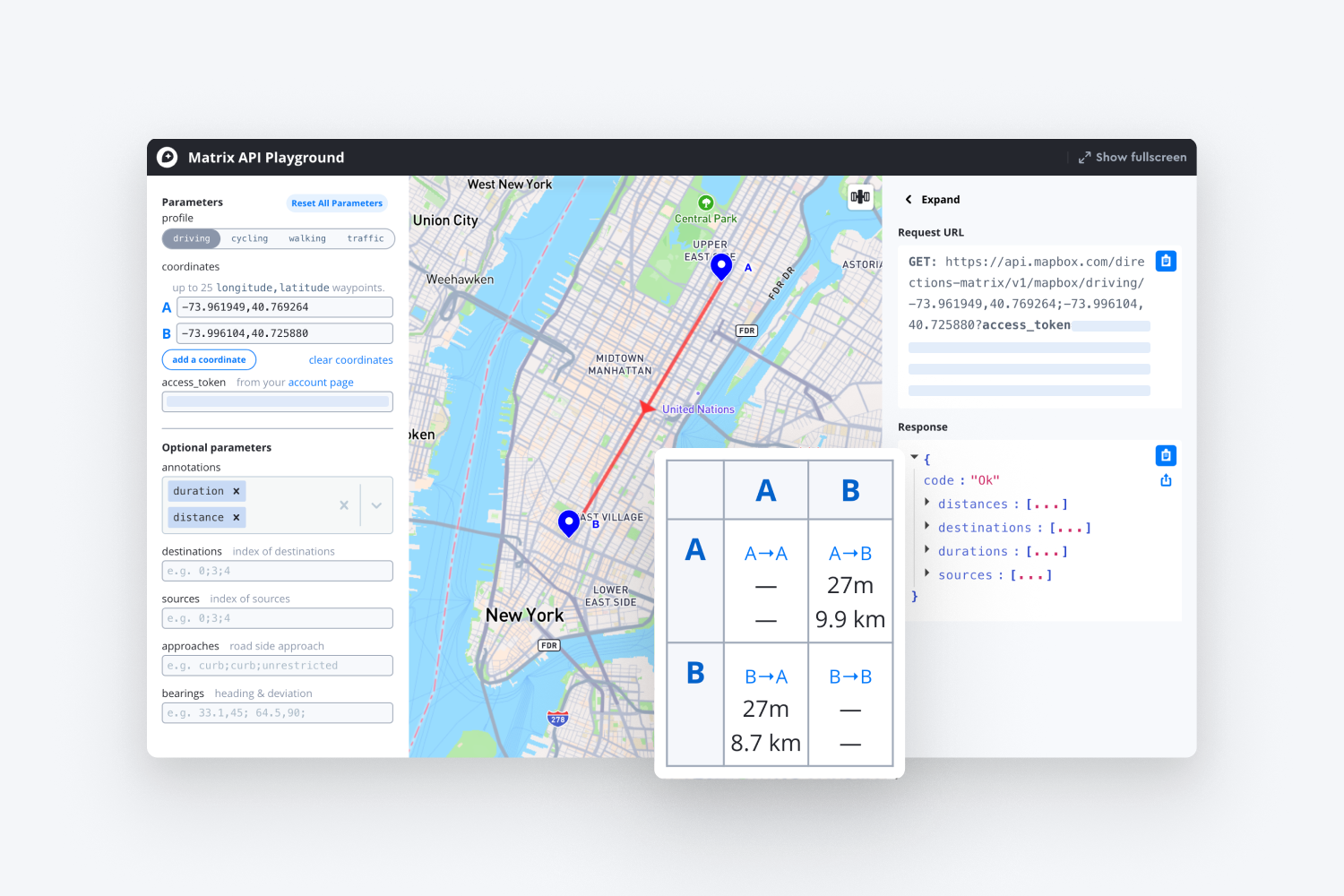
Helpful open source demos showcasing Mapbox tools and services include the Delivery App Demo and the Pin-powered Maps Demo.
These new resources make it easier for people to learn, test ideas, and find answers quickly. From clearer examples to step-by-step guides, the team focused on helping builders at every level feel confident in their projects.
Mapbox in-person in Las Vegas, London, Berlin, and beyond
This year brought us to some of the largest global gatherings in mobility, automotive, and technology.
CES 2025: Driving the future of navigation
CES has always been an exciting time for Mapbox, and 2025 was our strongest showing yet. We shared new demos, sat down with industry partners, and explored how AI agents will transform navigation, infotainment, and in-car UI design. Our meeting schedule was packed throughout the week, and the energy around new partnerships and use cases showcased how fast geospatial innovation space is moving across industries. Meet with us at CES 2026.
MOVE 2025: A global stage for mobility
At MOVE 2025, we met with automakers, mobility startups, public sector leaders, and developers shaping how people get around cities. The conversations this year were thoughtful and future-focused, centered on better routing, smarter in-car experiences, and new ways to bring data into vehicles.
Meeting developers where they build
Beyond large industry shows, our team spent time connecting with developers across mobile, cloud, and geospatial communities. These moments matter because they put us in direct conversation with people building real products in diverse environments.
This summer at State of the Map US, Kuan Butts shared insights into how Mapbox identifies and defines turn path data for routing engines. And in the fall, Topi Tjukanov shared Mapbox innovations at State of the Map Europe, joining discussions about open mapping, cartography, and modern developer workflows. These sessions reflected our continued connection to the open geospatial community and the people shaping how maps are built and shared.
We also brought Mapbox perspectives to AI-focused audiences. Ian Ward recently spoke at Geoawesome's “The Future of GeoAI: A 2026 Industry Forecast”, sharing thoughts on where GeoAI is headed and how spatial understanding fits into the next wave of AI development. His talk connected with developers working across cloud platforms and intelligent applications.
From in-person meetups to virtual stages, these conversations showed how Mapbox supports developers building for mobile apps, cloud services, and emerging AI systems. Staying close to these communities helps us learn faster and build tools that fit a wide range of real-world needs.
Launching new Mapbox offices in Berlin and London
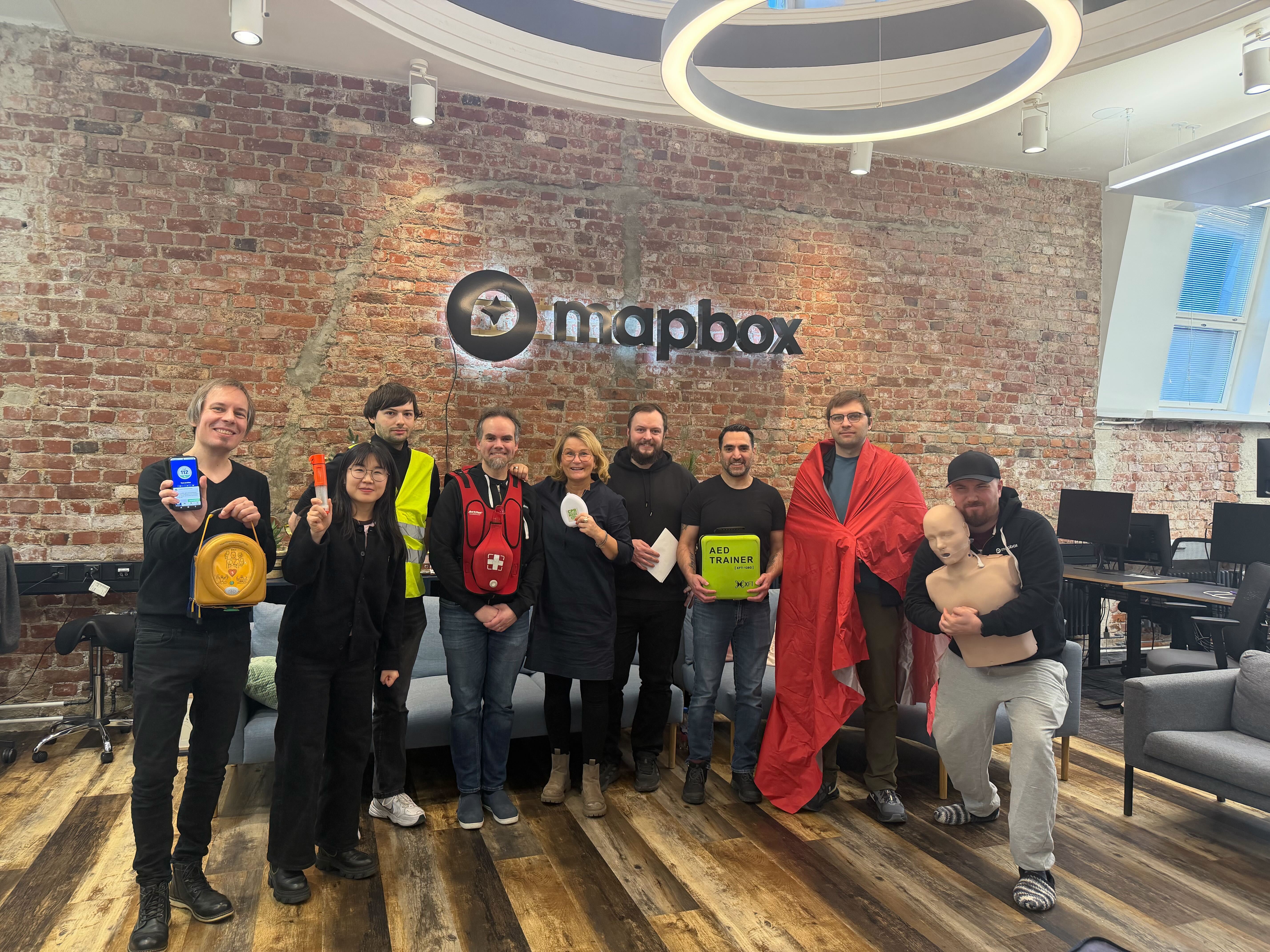
2025 was also a year of growth for Mapbox teams. We opened new offices in Berlin and London, expanding our presence in two cities full of engineering talent, startups, and design communities. Both offices are already active hubs for collaboration. From customer meetings to developer workshops to brainstorms between product and engineering teams, these spaces will help us stay close to the European partners who build amazing things with Mapbox every day.
.jpg)
Connecting virtually across the globe
Mapbox itself is a globally distributed team, and our community of developers spans every region. Throughout the year, we hosted virtual spaces for Mapbox builders to connect and learn.
BUILD with Mapbox 2025: Our largest audience yet
Our annual developer event, BUILD with Mapbox, reached its biggest audience ever in 2025, with over 4,000 developers, engineers, and product leaders attending. We also shared our most ambitious agenda yet, with 60 sessions of presentations and technical demonstrations and training workshops. BUILD with Mapbox is our chance to share what we are working on and hear how developers actually build with the Mapbox platform in practice. Your questions and ideas shape future updates and inspire teams across Mapbox.
Webinars
Throughout the year, Mapbox hosted seven technical webinars for attendees around the world:
- Building smarter navigation experiences
- Using Mapbox Navigation APIs for app features and data analysis
- Getting started with the Mapbox Navigation SDKs for mobile
- Spring release launches
- How to use Mapbox Geocoding for precise asset tracking
- Getting started with Mapbox Japan weather layers
- Data Workbench: A simpler way to add custom data to Mapbox
Each session connected builders with product experts at Mapbox, with vibrant Q&A and practical insights for building with Mapbox.
#30DayMapChallenge
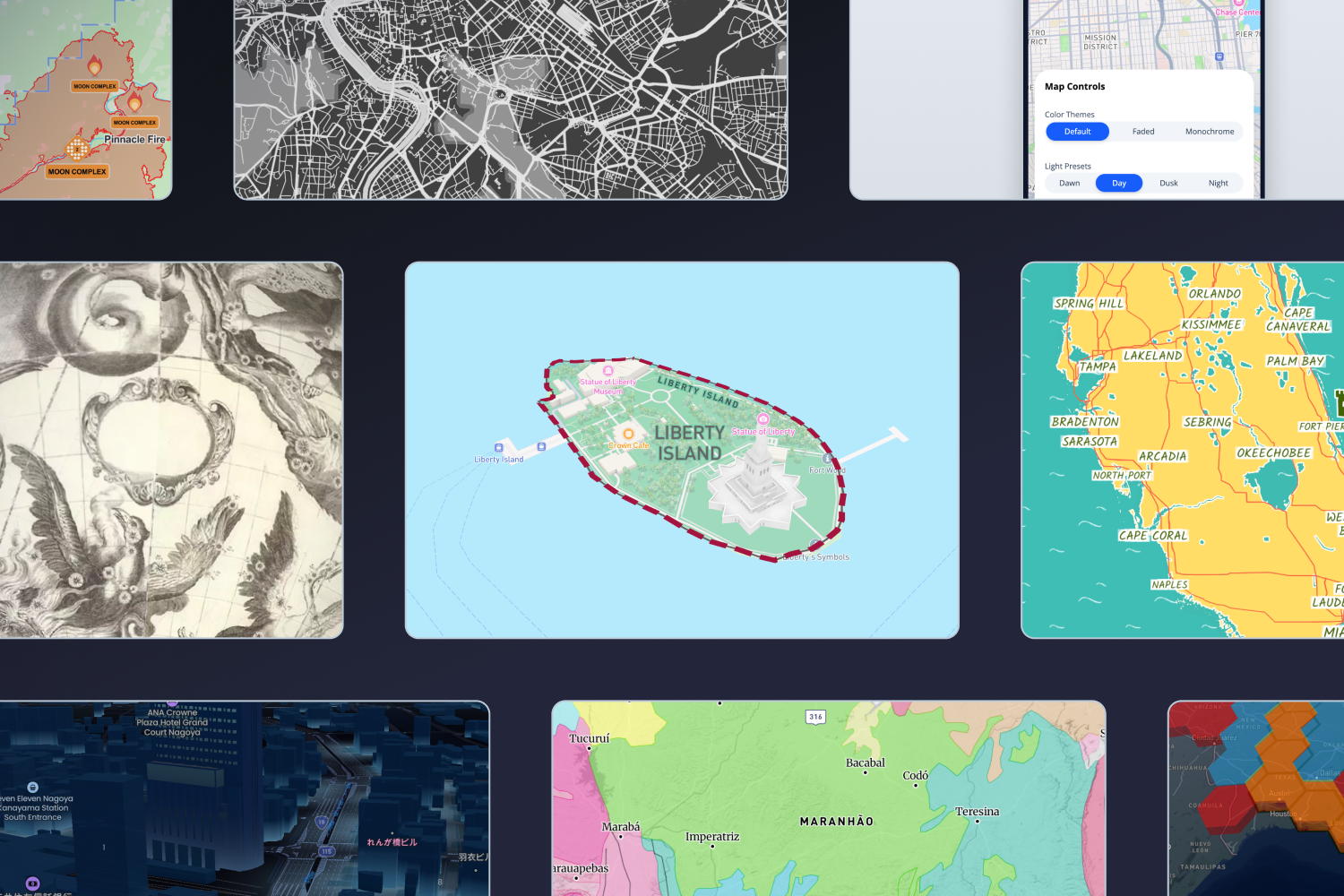
This year we again participated in the global #30DayMapChallenge on social media, posting a new map every day for 30 days straight. It pushed us to experiment, think differently, celebrate and showcase creators, and in some cases create maps just for the fun of it. Through the challenge, we connected with thousands of developers and cartographers who were also participating — including highlights from Mapbox builders like Kyle Walker, Aliaksandra Tsiatserkina, and Luke Decker. The community conversations around each daily map were energizing and gave us new inspiration for how people create with Mapbox.
Looking ahead to 2026
2025 was shaped by your engagement, whether you built an app, joined a webinar, visited us at an event, or shared feedback in our Documentation. We launched new Location AI tools, opened new offices, and connected with thousands of developers. Thank you for being part of this journey. We are excited for the year ahead and look forward to continuing to build with you!


Related articles

Mapbox Global Volunteer Month 2026: Giving back across communities worldwide
.jpg)
Women leaders at Mapbox: Shaping teams and growth
.png)