Snap builds with Mapbox to deliver wearable AR navigation
SPECS, new augmented reality glasses from Snap Inc., feature turn-by-turn directions from Mapbox
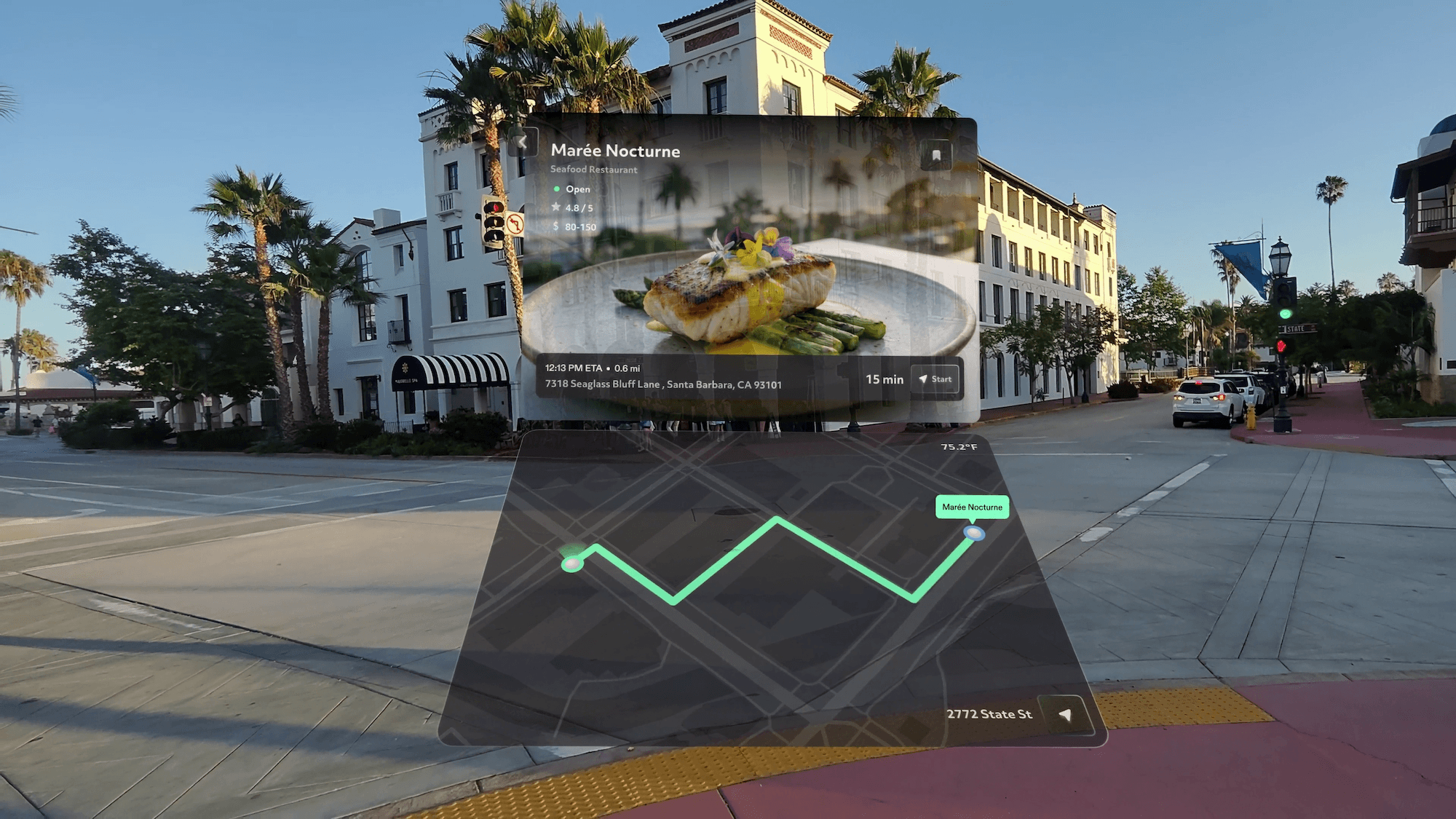
The SPECS team at Snap approached Mapbox with the question, “What could navigation feel like if it moved outside the phone and became part of the world around you?”
Navigation guidance on a mobile phone is effective but can be inelegant. Anyone who has walked through an unfamiliar neighborhood knows the awkwardness: look down at your phone, pause to get your bearings, walk a few steps, repeat. And then inevitably overshoot the corner, turn back, and pretend you meant to do that.
Augmented Reality (AR) navigation creates an enhanced experience. Maps with a route and guidance automatically appear where they’re useful — in the wearers’ line of sight, connected to the street in front of them — and only when needed, so the wearer can move confidently without distraction from the place they came to experience.
Building an intuitive navigation experience on a small device can be challenging. It needs to be accurate, responsive, and efficient enough to run on limited hardware. The SPECS team faced a similar challenge while building for their new AR glasses.
Mapbox frees SPECS developers to focus on innovation
Navigating on foot with a phone presents distinct challenges: the frustration of a map constantly spinning to find its bearing; the annoyance of a poorly timed turn alert; and the distraction of constantly looking down at a screen, instead of looking at the world ahead. With AR, getting the nuances of navigation right is critical because flaws have nowhere to hide — the entire interface is literally right in front of the wearer's eyes, overlaid on the world directly around them.
Snap wanted to focus on building a groundbreaking AR experience, not building maps, routing, and guidance from scratch. The SPECS development team looked to the Mapbox platform to provide navigation and maps that would run on-device.
Mapbox has over a decade of experience crafting a highly flexible, highly performant location platform for developers, including tools for building customizable turn-by-turn navigation with guidance for walking, cycling, and driving. The interesting challenge that SPECS presented was how to adapt the Mapbox platform to support an AR navigation experience without a conventional map interface.

Light frames, heavy-duty performance
SPECS pack advanced sensors and a see-through display into a compact wearable computer built for everyday wear at home and on the go. The Mapbox Navigation SDK provides a route and turn-by-turn guidance to get from the current location to the desired destination. The developer-friendly architecture of the Mapbox platform meant that the SPECS team could craft natural-feeling navigation designed for the unique needs of SPECS wearers.
With a wearable, the less visible the map is, the more useful the device becomes — essential guidance appears when you need it and vanishes when you don’t.
Anu Sharma, VP of Product, Mapbox
The SPECS team needed to ensure that the navigation software development kit (SDK) could run on-device within a compact footprint. Working together, the SPECS team and Mapbox engineers optimized the already-compact Mapbox Navigation SDK and map tiles to fit onto the device with room to spare.
The map gets out of the way
Mapbox VP of Product, Anu Sharma, joined Snap CTO Bobby Murphy on stage at AWE 2026 to share the unique approach the team took to enable navigation on SPECS. As Anu explains, the best navigation solution is not always “more map.” In the case of SPECS, subtle guidance and a translucent map that appear only when needed is the right approach. Navigation on SPECS aims to help people move through the world with confidence, whether they are exploring a foreign city or finding a new destination in a familiar neighborhood.

Collaboration made simple with the SPECS NDK
The collaboration between teams at Snap and Mapbox sets the stage for a new approach to navigation, right before your eyes.
Developing for any new platform takes time even if the underlying chip architecture is compatible with existing supported platforms. The SPECS Native Development Kit (NDK) performs a clever transformation that allows the SPECS team to take the Mapbox Navigation SDK and use the NDK toolchain to compile it to run natively on SPECS, at full speed, without rewriting anything. The NDK is a considerable accelerator for both SPECS and Mapbox. Instead of spending valuable weeks porting code, teams could experiment and innovate quickly and focus effort on developing a differentiated experience.
Snap brought a vision for AR navigation. Mapbox brought routes with guidance, Navigation SDK, vector map tiles, and an engineering partnership to bring it to life.
Learn more about building with the Mapbox Navigation SDK for mobile devices.


Related articles
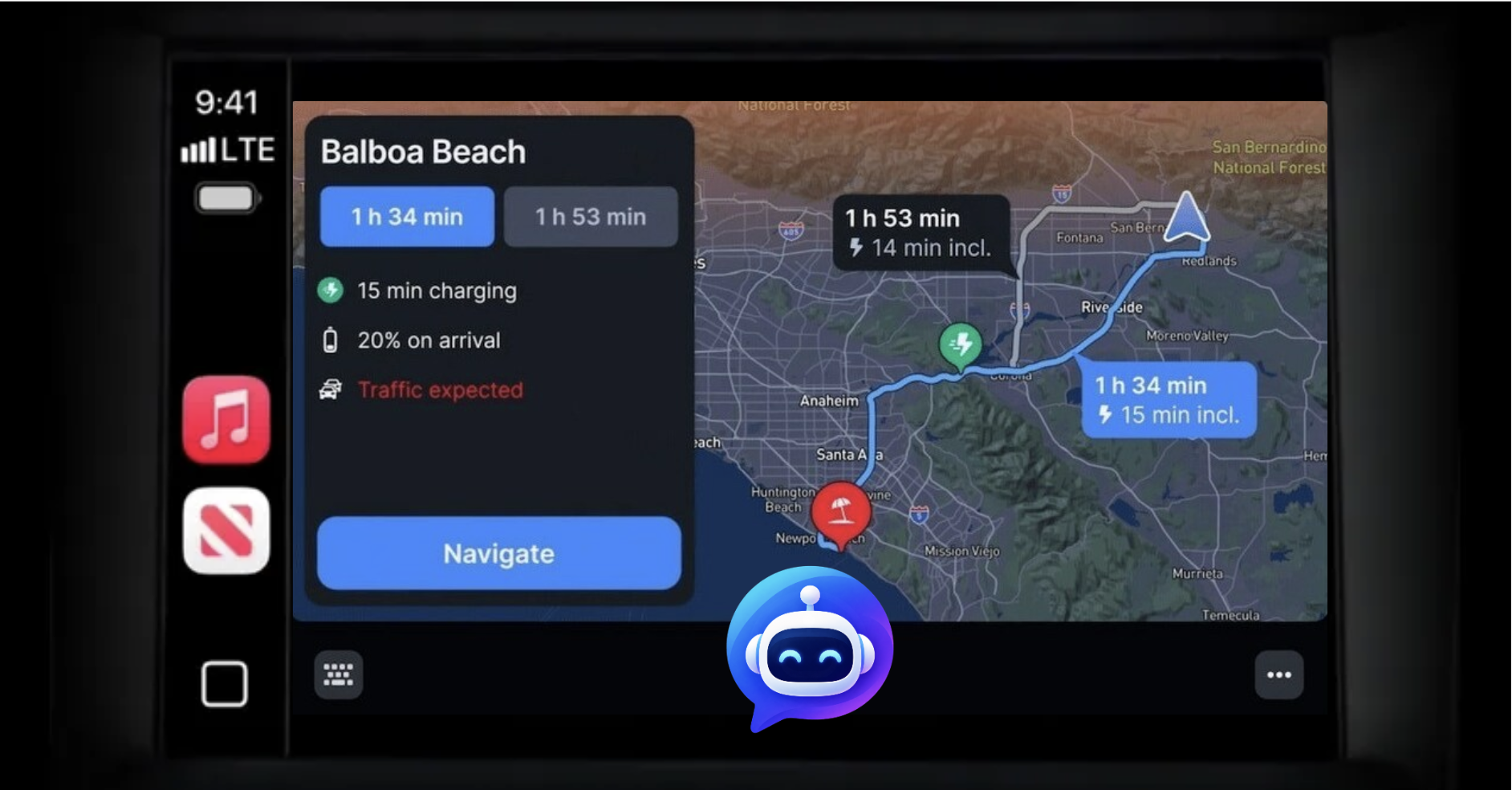
CarPlay on iOS 27 lets a voice assistant run over a live map
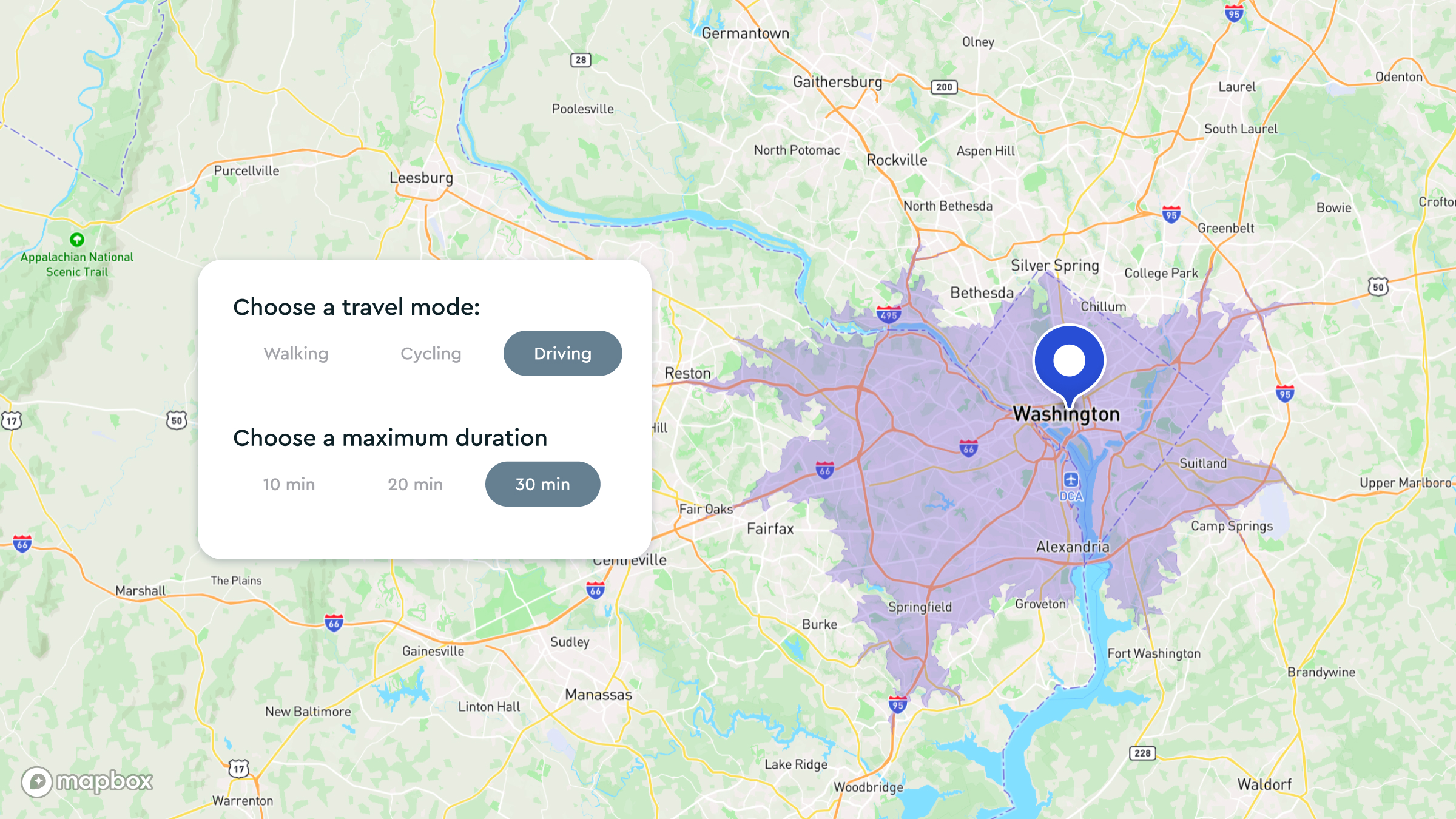
Using isochrones to understand reachability in web and mobile applications