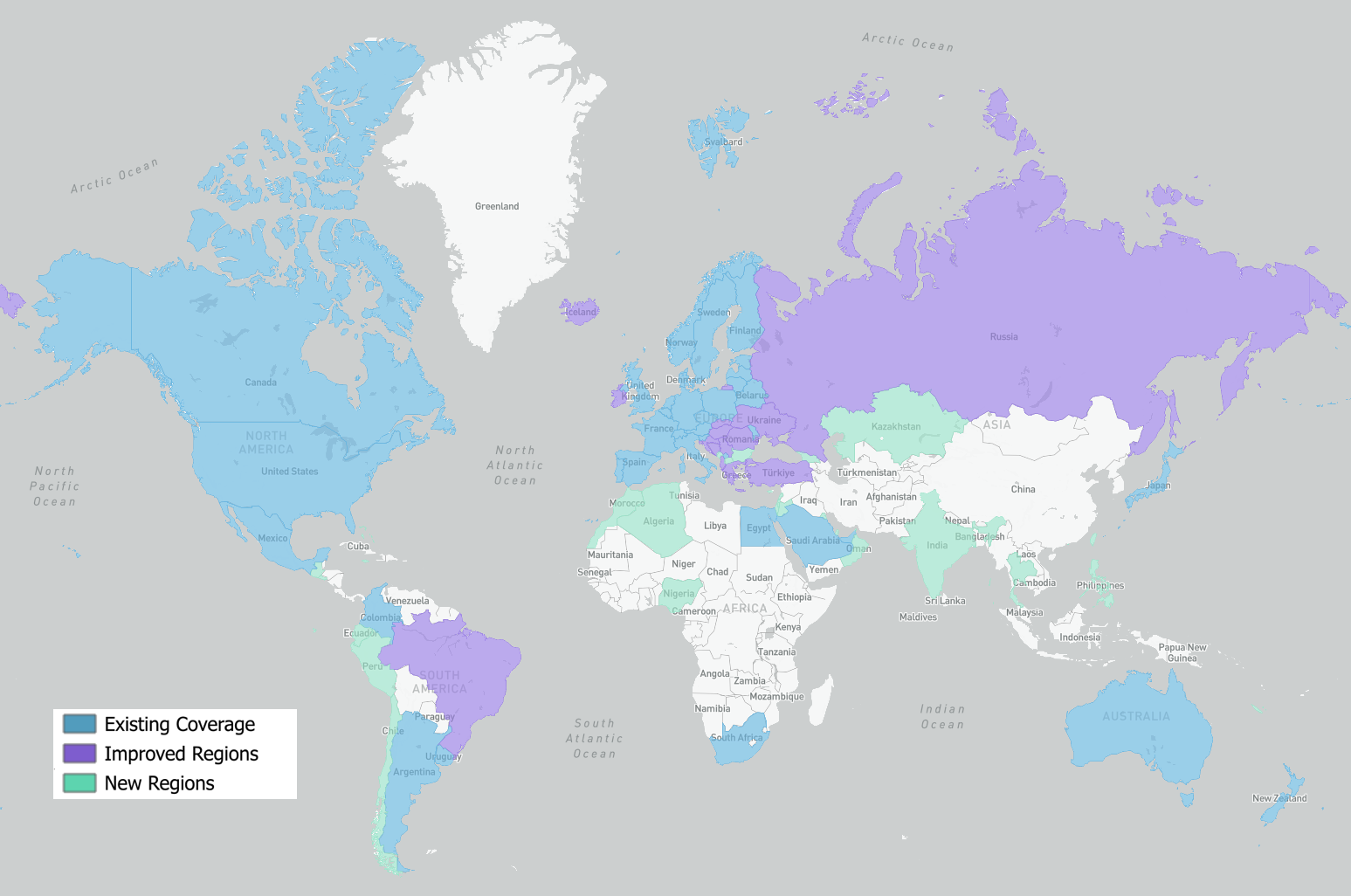
Introducing the Mapbox Places API
Detailed metadata for over 250 million places, built for AI search and local discovery
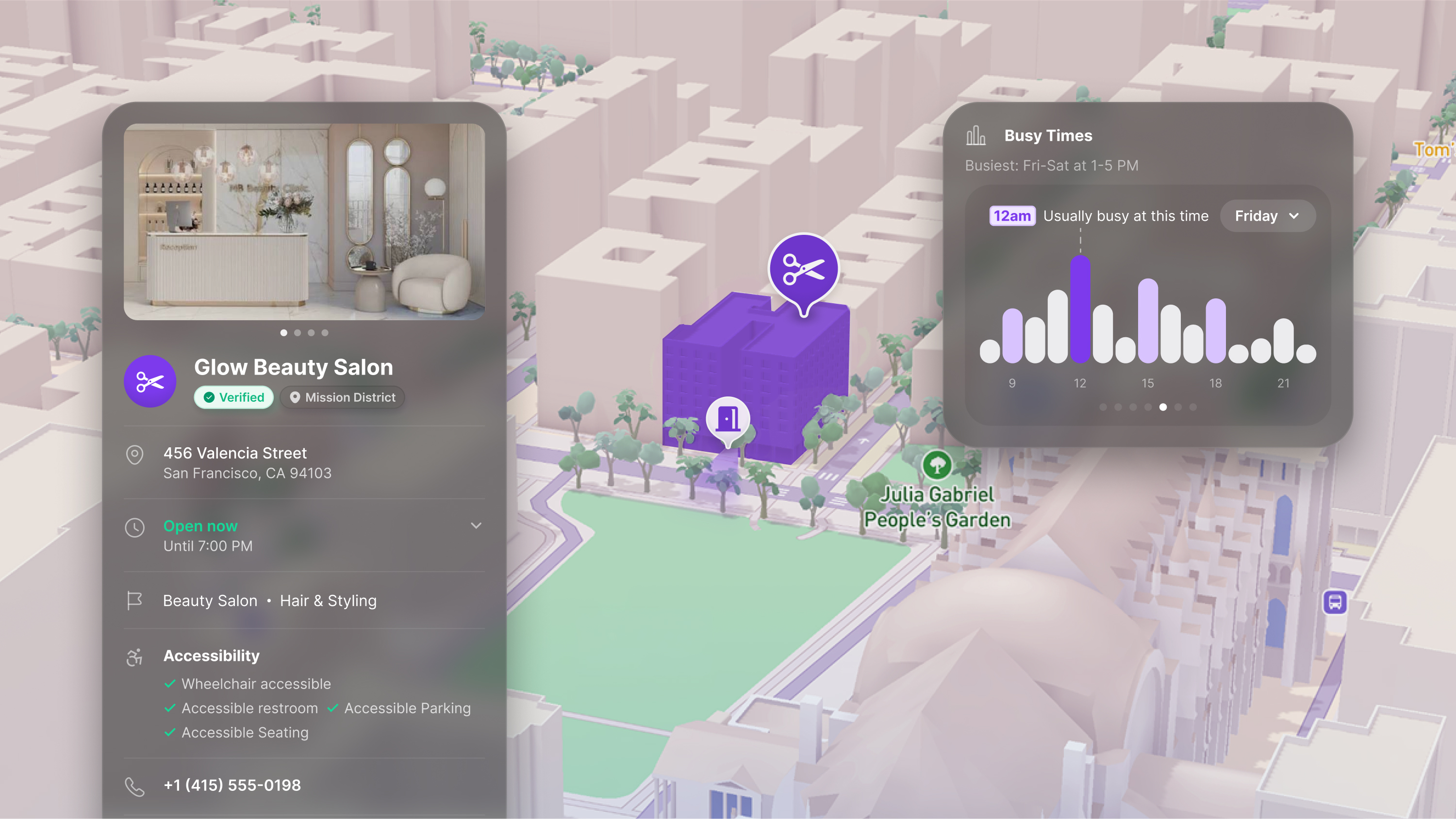
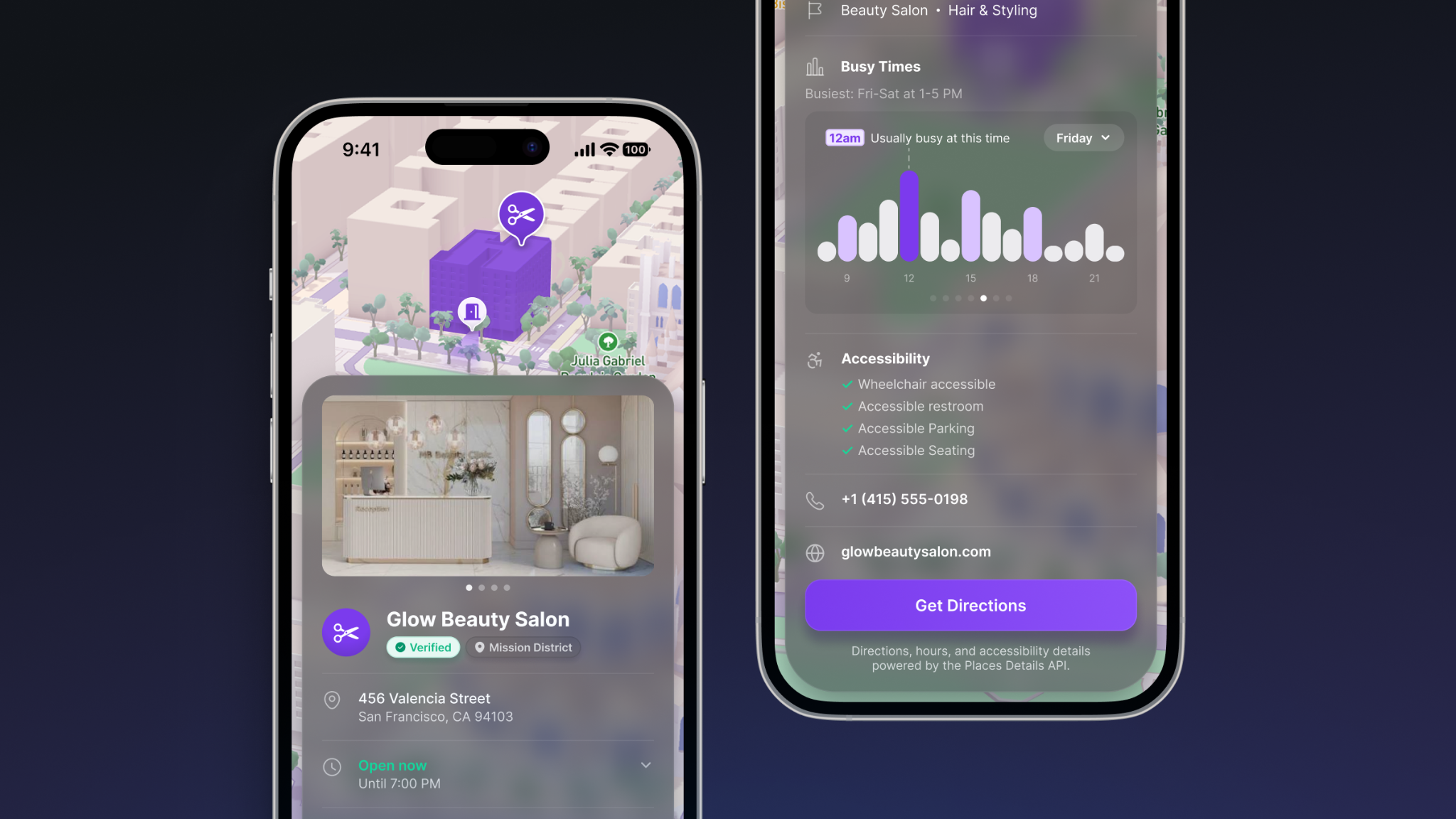
The Mapbox Places API is now available in public preview with the Details endpoint. The API gives developers access to detailed metadata for over 250 million places worldwide through a single API. Built for AI applications, local discovery, and search experiences, the Places API brings together core business information, such as names, hours, and attributes, with geographic context, including how each place connects to its address, neighborhood, and building, in a single dataset.
A single API for millions of places

Mapbox Places provides access to key information for the world's most searched-for destinations – covering the full spectrum of types of places, from global brands like McDonald’s, 7-Eleven, or Marriott to local neighborhood favorites.
Through a single API endpoint, developers can access rich information for more than 250 million Points of Interest (POIs) worldwide including:
- Business attributes (e.g., cuisine, accessibility, seating, Wi-Fi)
- Operating hours and contact information
- Hourly activity and popularity signals
- High-quality Photos
- Geographic context (standardized addresses, neighborhoods, and building relationships)
- Precise coordinates for both pedestrian entrances and vehicle arrival points
With stable Place IDs, developers can build and maintain end user experiences even as underlying data updates to match the real world. This enables them to build features like saved places, personalized recommendations, and long-term usage analytics that stay valid over time, instead of breaking or requiring constant reconciliation every time an upstream POI database refreshes.
Built to serve the spatial needs of AI search
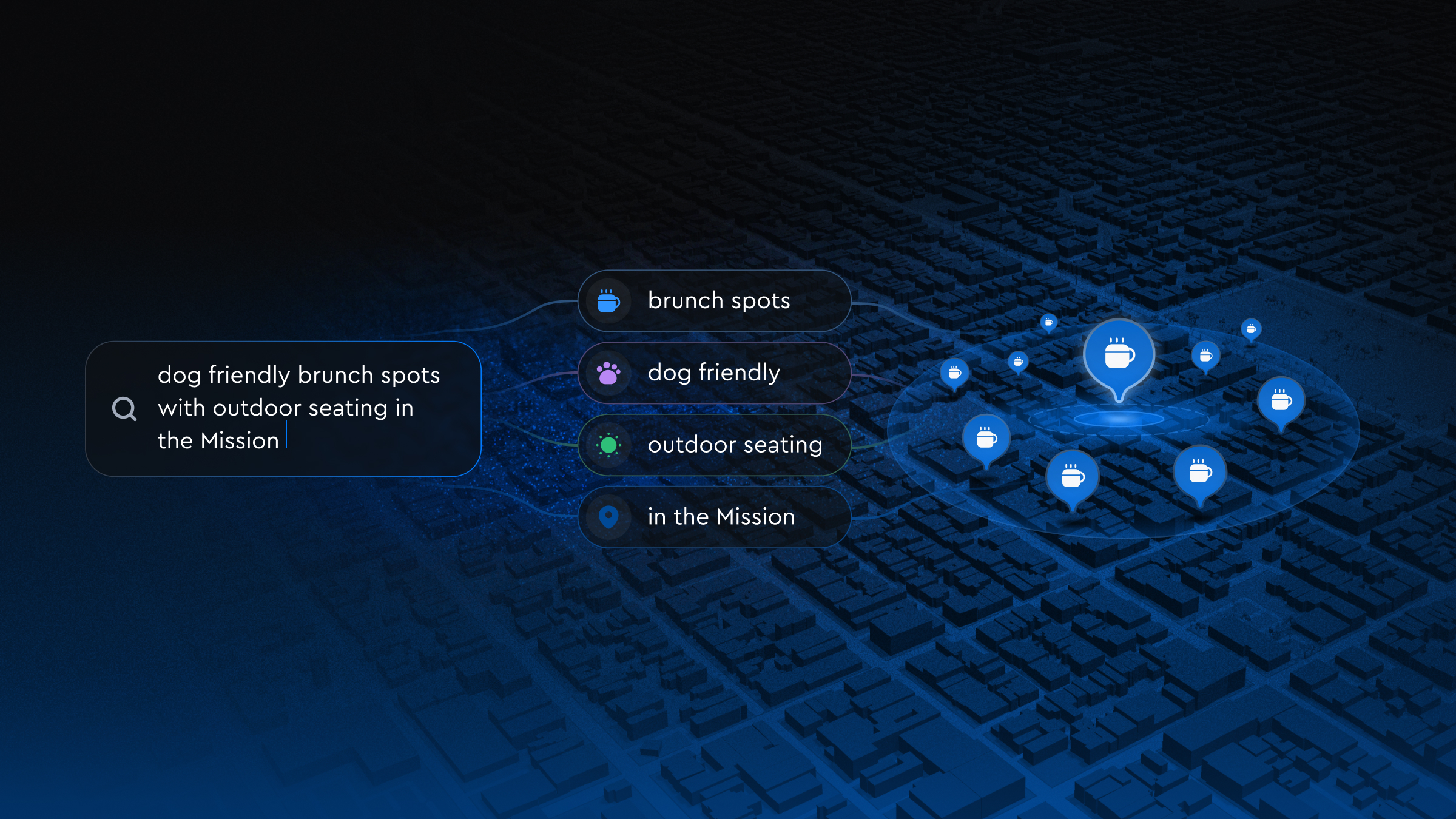
Today, instead of typing simple keywords like “coffee near me,” users are asking conversational questions such as “Find a dog-friendly brunch spot with outdoor seating that isn't too busy right now” or “Show me a quiet coffee shop within walking distance that's open late and has good Wi-Fi.”
Answering these questions takes more than business names and a semantic understanding of each point of interest (POI) . Developers need the ability to filter for rich business attributes, geographic context, and busyness levels throughout the day. They also need precise geocoordinates to present these places on a visual map. Until now, developers often had to combine business information, photos, activity data, and building information from multiple providers. Keeping those datasets synchronized without losing accuracy or context adds even more complexity.
Traditional POI datasets were designed to answer simple questions like “Where is this business?” Today's AI search experiences require much more. Users need to know more than where a place is. They also need to understand the spatial context of a place: what it is, how it connects to its surroundings, and what is happening there at that moment. Let’s break down the challenges that developers need to tackle to build a fluid and insightful end user experience.
Challenge: Static data in a dynamic world
Traditional databases can answer where a business is and what its published hours are, but they treat a venue the same at 9:00 AM on a Tuesday as they do at 9:00 PM on a Friday. The data lacks the live context of human movement patterns.
Mapbox Places provides hourly activity (busyness)
To help users avoid crowds or find the hottest spots, Mapbox Places provides busyness trends at a place. Mapbox analyzes telemetry derived from billions of anonymized location signals, delivering busyness signals about when a place is likely to be quiet or at its busiest. Available for select venues across North America and Western Europe, Mapbox Places provides a 0–100 busyness score broken down by the hour and day of the week for Places categories like food and drink, retail, consumer services, and entertainment.
Challenge: Places as flat points, not real locations
Most place data treats a point of interest as a single point on a map. It does not capture how that business connects to the building around it or the neighborhood nearby.
Mapbox Places provides deep geographic context
Mapbox Places binds a POI directly to its real-world environment, with Details API responses that include normalized address structures, neighborhood data, and a Building ID. This allows developers to visually highlight the exact building footprint on a Mapbox map when a user taps a POI.
Challenge: The ‘ghost place’ problem (ID decay)
Traditional location providers rely on brittle upstream keys. When data pipelines refresh, POI identifiers frequently change. This can break applications, users’ saved favorites, or downstream analytics without developers realizing it.
Mapbox Places provides Stable Place IDs
Unlike traditional datasets where identifiers frequently break during upstream pipeline updates, the Mapbox Place ID acts as a persistent UUID anchor. It references rather than encodes changing data structures, ensuring that saved places, customer analytics, and app links remain valid unless the real-world entity permanently closes. This helps developers build applications that continue working as the underlying real world data evolves over time.
Challenge: Modern AI search requires connected location services
Finding a place is only part of the experience. Developers also need maps, routing, business details, and geographic context to help users take the next step. Connecting those services across multiple providers adds unnecessary complexity.
Mapbox Places provides platform support and Search Box integration for multi-intent queries
Unlike standalone POI providers, the Places API is built on the broader Mapbox location platform. Because Places shares identifiers and geographic context across Mapbox Search, Geocoding, Boundaries, and Navigation, developers can move from search to mapping, routing, and analytics without stitching together multiple providers.
To support conversational AI queries, the Mapbox Places API is designed to work with the Mapbox Search Box API. Add the new ‘near’ parameter to a Search Box API request to search for a place by name and location in a single query. For example, submit a query that contains a search phrase and a location anchor (e.g., “Manny’s Deli in Chicago”), retrieve the Mapbox ID, and use this ID with the Places API Details to retrieve the full place metadata.
Get started with the Mapbox Places API

The Details endpoint of the Places API is available today in public preview. Your first 1000 requests are on us. If you’re building a production application, contact us through this form, and our team will be in touch.
To query the Details endpoint, pass a mapbox_id from the Search Box API response to retrieve a complete, enriched place record. Explore the response schema and learn more in the Places API documentation.
Frequently asked questions
How is the Mapbox Places API (Details endpoint) different from the Mapbox Search Box API?
The two APIs serve different steps in a search experience. The Search Box API is built for identifying a place and returning a Mapbox Place ID. It also covers one-off lookups when a user already knows the name and location (the forward endpoint) and category-based searches for the nearest or best-matching POIs, like “coffee near me” (the category endpoint).
The Details endpoint of the Places API takes the resulting mapbox_id and returns the full enriched place record, including business attributes, hours, activity signals, photos, and geographic context.
In short, use the Search Box API to find the right place and the Places API Details endpoint to get all the details about it.
Where is hourly activity available?
While Mapbox Places offers comprehensive global POI coverage, our most advanced spatial layers—such as telemetry-driven hourly popularity scores—are rolling out across North America and Western Europe. Popular locations include McDonald’s, Panera, Aldi, Planet Fitness, FedEx, and AMC Theatres.
How does the Mapbox Places API handle photos?
The Details endpoint of the Mapbox Places API delivers photos via direct URLs, allowing developers to instantly enrich place cards and interactive search results. To learn more about photo coverage or discuss your production requirements, contact the Mapbox team through this form.
What makes a Mapbox Place ID stable?
Unlike traditional datasets where identifiers frequently break during upstream pipeline updates, the Mapbox Place ID acts as a persistent UUID anchor. It references rather than encodes changing data structures, ensuring your saved places, customer analytics, and app links remain valid unless the real-world entity permanently closes.


Related articles
Introducing Natural Language Queries in the Mapbox Search Box API
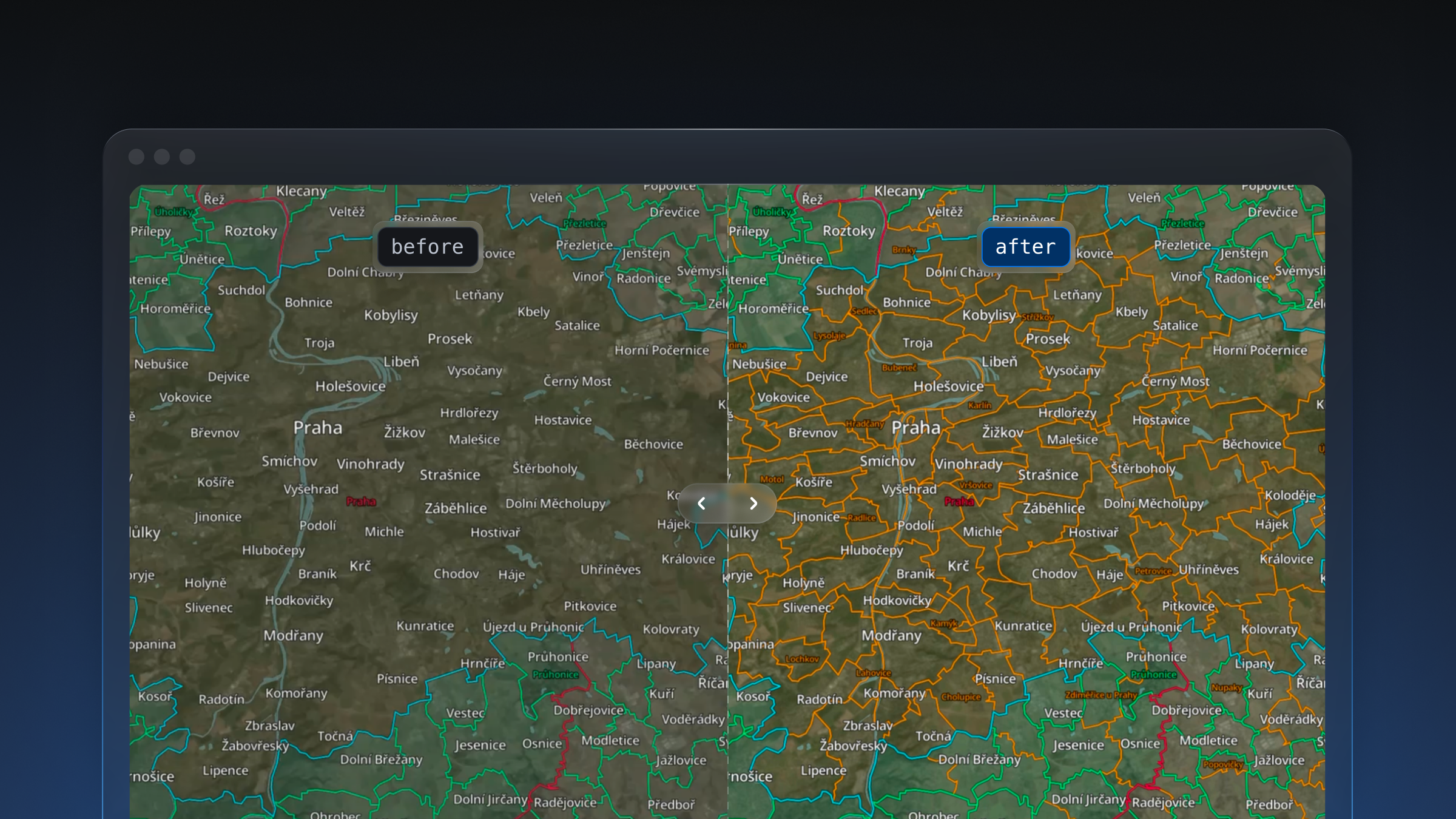
Boundaries 4.7: Major Europe refresh and expanded global boundary coverage